


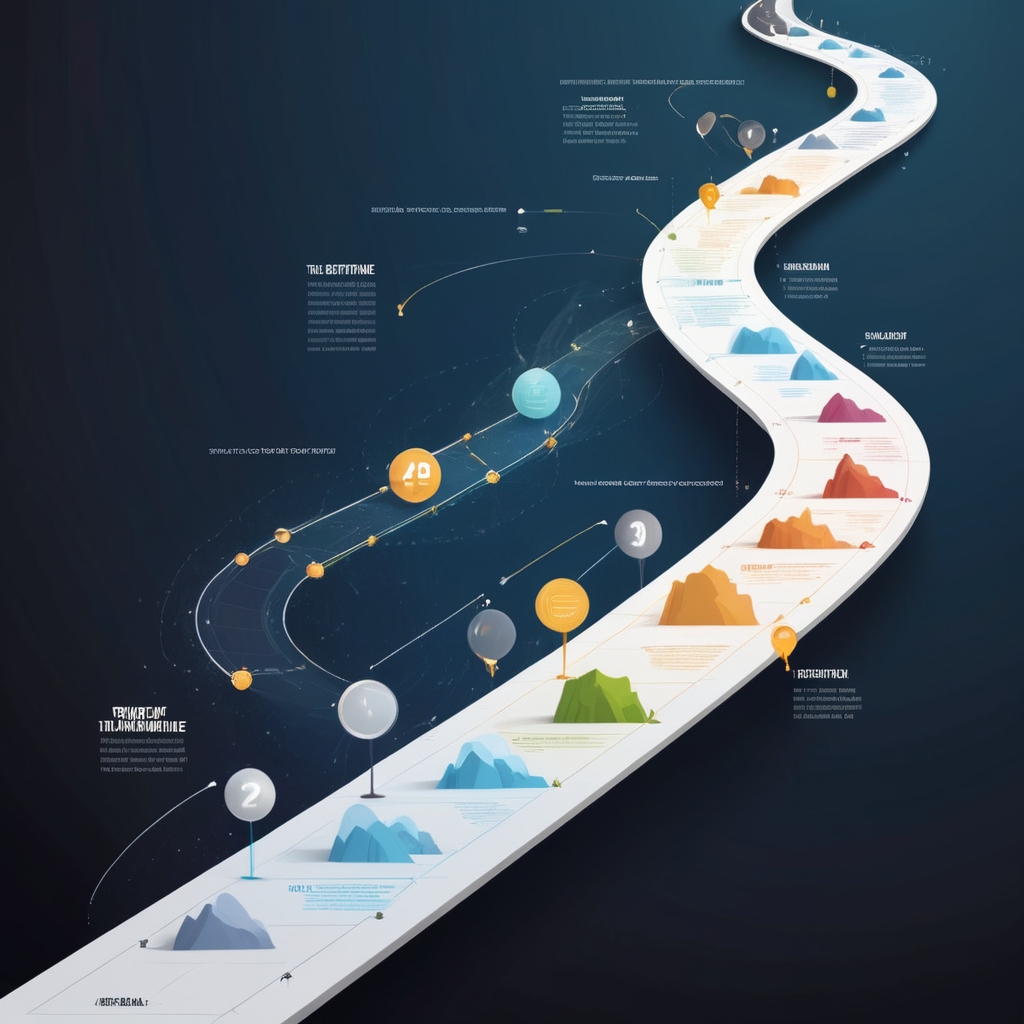
Build bridges between the present and your ideal future with backcasting
From the future to the present
Back to the future with backcasting
Backcasting is a powerful methodology that enables organisations to shape their future by looking backwards. This approach arose as a reaction to traditional forecasting methods, which are often based on extrapolating the present into the future. Backcasting, by contrast, starts with a desired vision of the future and then works back to the present to identify the strategies needed to realise that vision.
Origins of backcasting
The term "backcasting" was first introduced in the 1970s by the Canadian scientist Robert Jungk. He established that it was essential not only to predict future trends, but also to actively think about the desired future and then develop ways to reach that future. Since then, backcasting has gained popularity as a flexible methodology that can be used in various fields, including urban planning, environmental management and business strategy.
Backcasting is often used to formulate sustainable development goals, solve complex problems and develop innovative strategies. It enables organisations to proactively shape their future, taking uncertainties and external influences into account.
Step-by-step plan for backcasting
- Define the vision of the future: Define the desired future situation. This can be a sustainable, efficient or innovative state, depending on the purpose of the backcasting process. Here are some guidelines for creating an effective vision of the future:
- The vision of the future should be inspiring, something that appeals to people on a deep level and spurs them into action.
- At the same time, the vision should be challenging, so that those involved feel encouraged to surpass themselves and explore new paths.
- Make sure the vision of the future is realistic and based on achievable goals. At the same time, it should be ambitious enough to be challenging and to stimulate innovation.
- Include diverse stakeholder perspectives in the vision of the future. This increases engagement and makes the vision more representative of the interests of different stakeholders.
- Identify critical objectives: Identify the most important goals and milestones needed to achieve the desired vision of the future.
- Analyse backwards: Work back from the vision of the future to the present and analyse which steps are needed to achieve the critical objectives.
- Develop strategies: Develop strategies and action plans based on the analysis to realise the desired future.
- Implementation and monitoring: Implement the strategies and continuously monitor progress, making adjustments where necessary.
Backcasting versus roadmapping
Backcasting and roadmapping are methods that resemble each other closely. Backcasting has a strong tradition in the policy and non-profit sector, for example for sustainability goals. Roadmapping is more often used in business, for example for developing new technological applications. Backcasting often centres on a normative image of the future, whereas roadmapping centres on a technology or product. Other similarities and differences are:
Similarities
- Long-term planning: Both backcasting and roadmapping focus on long-term planning. They help organisations look beyond the present and think about their future position and goals.
- Steps to achieve goals: Both methods involve identifying the steps and strategies needed to achieve long-term goals. They offer a structured approach to move from the current point to the desired future state.
- Stakeholder involvement: Both backcasting and roadmapping often emphasise stakeholder involvement. Involving different stakeholders helps create a widely supported vision and identify relevant goals.
- Flexibility and adaptation: Both methods acknowledge the need for flexibility and adaptability. They are open to revising plans based on changing circumstances, new insights or unexpected obstacles.
Differences
1. Time orientation: The most important difference lies in the time orientation. Backcasting focuses on formulating a desired future and then works back to the present to identify strategies. Roadmapping, by contrast, often starts in the present and sketches a path to the future.
2. Focus on the image of the future: Backcasting places strong emphasis on creating an inspiring image of the future that serves as a guide for strategy development. Roadmapping places more emphasis on specifying concrete actions and milestones to achieve goals.
3. Level of detail: Roadmapping can be more detailed in terms of specific actions, deadlines and responsibilities. It is often aimed at planning concrete steps in the short and medium term. Backcasting can be more focused on determining general strategic directions.
4. Scenarios and uncertainties: Backcasting often involves scenario analysis and dealing with uncertainties when formulating the vision of the future. Roadmapping can also integrate these aspects, but the emphasis may lie more on specific action plans.
5. Field of application: Backcasting is often used in contexts where long-term goals and vision are more important, such as sustainability planning. Roadmapping is more broadly applicable and can be used in various sectors, including technological development, product launches and project management.
In general, backcasting and roadmapping are both very useful methods for connecting the future with the present. The choice between the two depends on the specific needs, goals and context of the organisation or project.
Backcasting in combination with other methods for exploring the future
Backcasting and trend analysis
- Trend analysis and backcasting complement each other because trend analysis lays the basis for understanding current and future developments. While trend analysis focuses on identifying emerging patterns, backcasting offers a structured method to define a desired future, independent of existing trends.
- Trend analysis can provide the input for identifying important trends and drivers. This information can then be used in formulating the vision of the future during the backcasting process.
- Read more about trend analysis
Backcasting and scenario planning
- Scenario planning and backcasting share the aspect of dealing with uncertainties and exploring possible future scenarios. Where scenario planning analyses different possible futures, backcasting focuses on creating a desired image of the future and then works back to identify the steps to reach that image.
- Scenario planning can reveal the variability of possible future conditions. Backcasting can then be used to develop a specific vision in response to the most desirable scenarios, identifying concrete strategies.
- Read more about scenario planning
Backcasting and wind tunnelling
- Test tunnelling, also known as wind tunnelling, is a method in which policy proposals are tested in virtual environments before they are implemented. In combination with backcasting, this can help assess the feasibility and impact of proposed strategies.
- After backcasting has led to the identification of strategies to achieve a desired future, wind tunnelling can be applied to test these strategies in simulated conditions. This helps validate effectiveness and identify any unforeseen consequences.
- Read more about test tunnelling
Combining backcasting with other methods in foresight
Combining trend analysis, scenario planning, wind tunnelling and backcasting in foresight offers a holistic approach.
- Start with trend analysis to understand current and emerging developments.
- Use scenario planning to explore different future scenarios and address uncertainties.
- Implement backcasting to formulate a clear vision of the desired future and identify strategies.
- Apply test tunnelling to test and optimise the feasibility of the proposed strategies.
By using these methods together, organisations can develop a more robust understanding of the future, prepare better for uncertainties and work in a more goal-oriented way.
Toekomstverkennen.nl is ready to support organisations in carrying out foresight studies, such as backcasting, scenario planning and test tunnelling. With a proven track record, we offer expert advice and guidance. We also provide training both on location and online, enabling organisations to acquire the knowledge and skills needed to carry out effective foresight studies independently and achieve their strategic goals.