


Mapping the future with a structured roadmap
Turn vision into action with roadmapping
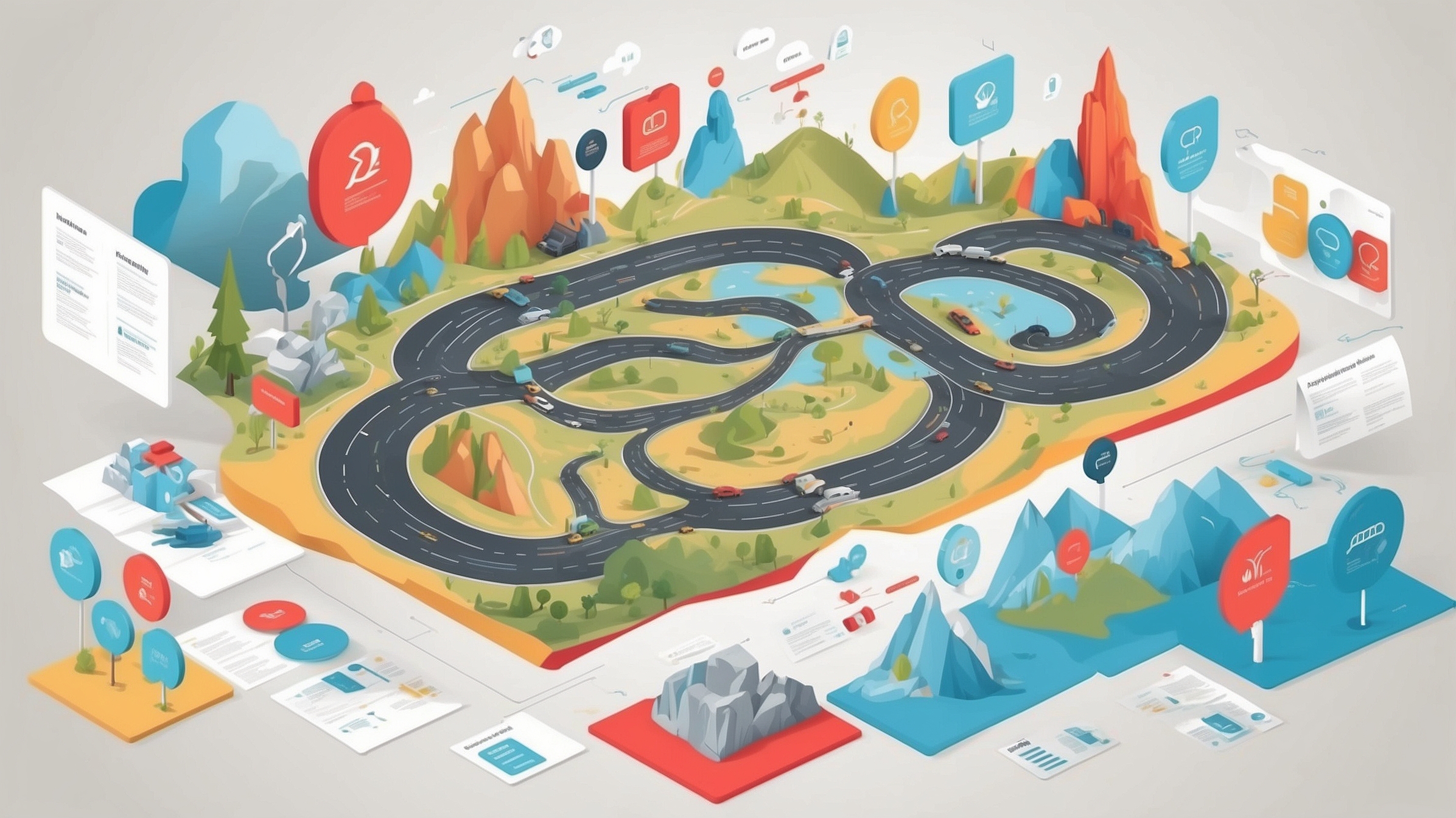
A roadmap is a structured plan with a clear timeline and associated goals. It is drawn up by working backwards from a future goal that you want to achieve. The roadmap includes the steps and actions that need to be taken to reach the goal. This process helps bridge the gap between long-term vision and the present, making it possible to discuss what needs to happen and how it will be achieved.
Roadmaps often contain specific solutions, also called "milestones", related to different contexts such as technological developments, the legal environment, political decisions, and so on. These milestones are interconnected and contribute to achieving the overarching goal.
Roadmaps can have various layers, and can be worked out at different levels of detail and for different aspects of the goal.
How do you make a roadmap?
Drawing up a roadmap requires a structured approach. Here is a step-by-step plan you can follow to create an effective roadmap:
- Step 1: Define the goal and vision:
- Define the specific goal you want to achieve.
- Formulate the overarching vision that supports this goal.
- Make sure the goal is in line with the organisation's long-term strategy.
- Step 2: Identify stakeholders:
- Identify all stakeholders involved in achieving the goal.
- Involve key internal and external stakeholders in the process.
- Step 3: Gather information:
- Gather relevant data and information related to the goal.
- Analyse market trends, technological developments and other factors that may have an influence.
- Step 4: Define milestones:
- Identify key milestones that must be reached to achieve the goal.
- Make sure the milestones are measurable and achievable.
- Step 5: Prioritise milestones:
- Prioritise the identified milestones based on their impact and urgency.
- Determine which milestones are crucial for achieving the overarching goal.
- Step 6: Create a timeline:
- Draw up a timeline with clear deadlines for each of the milestones.
- Consider the time horizon and factors such as seasonal influences, market dynamics and technological trends.
- Step 7: Link milestones to solutions:
- Identify specific solutions or actions needed to reach each milestone.
- Link these solutions to the relevant milestones.
- Step 8: Visualise the roadmap:
- Use visual elements such as charts, diagrams or software tools to create the roadmap.
- Make sure the roadmap is clear and understandable for all stakeholders.
- Step 9: Discuss and refine:
- Organise a meeting with stakeholders to discuss the roadmap and collect feedback.
- Adjust the roadmap based on the feedback and insights received.
- Communicate the roadmap to all stakeholders and provide a clear explanation of the objectives and the steps being taken.
- Keep stakeholders involved and informed throughout the process.
- Step 10: Implement and monitor:
- Implement the roadmap in the organisation and start carrying out the planned activities.
- Regularly monitor progress, evaluate performance and adjust the roadmap if necessary.
- Roadmapping is an iterative process. Keep evaluating and adjusting the roadmap based on new information, changing circumstances and lessons learned during implementation.
By following this step-by-step plan, you can develop a roadmap that is not only clear, but also flexible enough to adapt to changes in the environment or strategic direction.
As with any method, there are advantages and disadvantages to working with roadmapping:
Advantages of roadmapping
- Strategic focus: Roadmapping helps organisations maintain a strategic focus by defining clear goals and milestones. This ensures that all activities and decisions are in line with the organisation's overarching vision.
- Communication and collaboration: Roadmaps serve as a visual means of communication that is easy for all stakeholders to understand. It therefore promotes effective communication and collaboration between teams, departments and external partners.
- Risk management: By mapping possible milestones and challenges, roadmapping gives organisations the opportunity to identify risks and proactively take control measures. This reduces the chance of unexpected obstacles.
- Innovation management: Organisations can use roadmaps to manage innovation and introduce new technologies or products in a structured way. It allows them to stay ahead of market developments.
- Stakeholder involvement: The process of creating roadmaps involves stakeholders in decision-making and creates engagement and commitment. This is especially important for reaching consensus among diverse stakeholders.
Disadvantages of roadmapping
- Rigid in a rapidly changing environment: A detailed roadmap can seem inflexible in a rapidly changing environment. It can be difficult to adapt to unexpected changes or new opportunities that arise.
- Excessive complexity: Drawing up detailed roadmaps can lead to excessive complexity, especially if multiple layers or levels of roadmaps are used. This can make management more difficult.
- Uncertainty and forecasting errors: It is hard to predict the future accurately, and roadmaps are based on assumptions and forecasts. This creates a risk of uncertainty and errors in planning.
- Time-intensive: The process of creating and maintaining roadmaps can be time-intensive. It requires careful analysis, stakeholder involvement and regular updates to stay relevant.
- Resistance to change: Some team members may resist changes resulting from the implementation of a roadmap. This can occur when they feel constrained by the established plans.
The success of roadmapping depends on an organisation's ability to exploit the advantages and manage the disadvantages effectively. Flexibility, regular evaluation and open communication play a crucial role in maximising the benefits of roadmapping.
An integrated approach to the future
In general, all foresight methods complement each other in the strategic planning process. Roadmapping, too, can easily be combined with other methods:
- Roadmapping and scenario planning: Both approaches focus on dealing with uncertainty and planning for the future. While roadmapping concentrates on translating goals into concrete steps and milestones, scenario planning focuses on creating multiple future scenarios and identifying strategies suited to each scenario. Together they can provide a holistic picture of possible future developments. Read more about scenario planning.
- Roadmapping and trend analysis: Trend analysis focuses on identifying emerging patterns and developments in various sectors. Roadmapping often takes these trends as input to define future milestones and actions. The roadmap acts as a practical guide for responding strategically to trends, while trend analysis offers a broader context for the steps to be taken. Read more about trend analysis.
- Roadmapping and early warning systems: Early warning systems are used to inform organisations early about possible risks and opportunities. Roadmapping integrates such warnings into the planning process, allowing organisations to respond proactively to changes in the environment. Using early warning systems within roadmapping helps adjust strategic plans based on continuous monitoring. Read more about early warning systems.
- Roadmapping and Three Horizons: The Three Horizons framework divides innovation and strategy into three horizons. Horizon 1 covers ongoing activities, Horizon 2 is about emerging opportunities, and Horizon 3 is about future disruptions. Roadmapping can address each of these horizons by defining concrete steps and milestones for both existing activities and future opportunities and disruptions. It offers a structured way to plan across the different horizons. Read more about Three Horizons.
Using these instruments effectively together can help organisations prepare for and respond to a dynamic and uncertain future.
Dive deeper into this strategic tool by taking part in our short workshops or an in-depth training.